
Research
Research clusters
Each cluster reflects a broad, ongoing area of activity rather than a single project or paper, drawing on methods from both microwave engineering and optical science to form a cohesive research ecosystem.
Terahertz Components
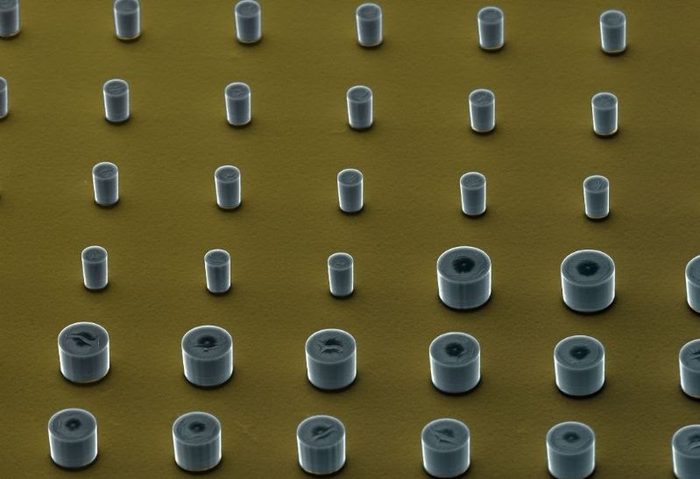
Metasurfaces for full control of free-space waves
A metasurface is a planar array of sub-wavelength metallic or dielectric resonators. Strong interaction between incident terahertz waves and these resonators gives us fine control over amplitude, phase, and polarisation, capabilities especially valuable where natural materials with desirable properties are scarce. We apply this to beamforming, polarisation control, sensing, and dynamic wavefront manipulation.
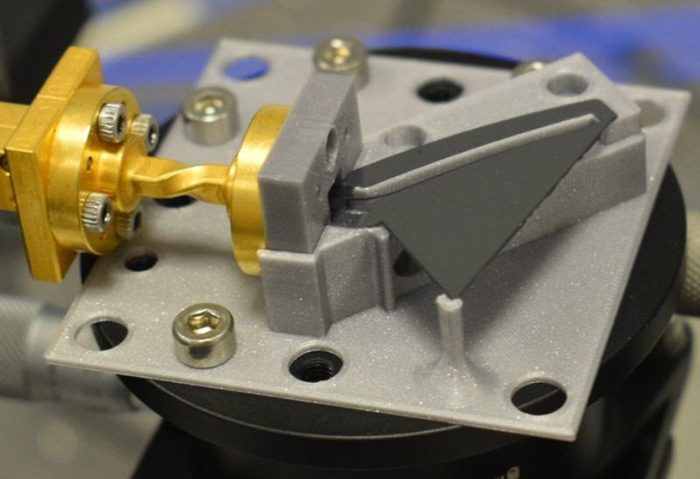
High-efficiency broadband terahertz antennas & lenses
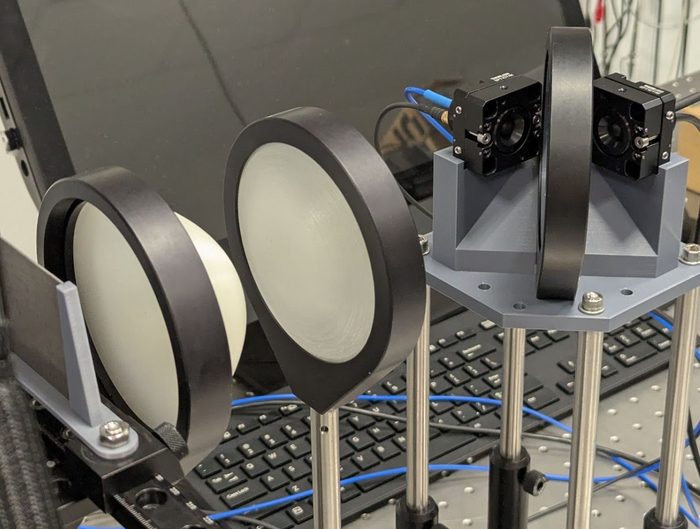
We design beamforming devices to meet demanding requirements in bandwidth, efficiency, directivity, compactness, and fabrication complexity. A key consideration is broadband operation, capitalising on the vast bandwidth available at terahertz frequencies, while mitigating the increasing ohmic losses that limit radiation efficiency. Our research focuses on unconventional antenna and lens designs that enable practical terahertz wireless and imaging applications.

Substrateless integrated platform for terahertz frontends
Terahertz technology is shifting from free-space optics towards integration, but high losses in metallic and dielectric materials rule out a direct adoption of conventional integrated-circuit technologies. We originated a substrateless platform of high-resistivity silicon on effective medium theory, reaching arbitrary permittivity values with structural simplicity, near-zero dissipation, and fractional bandwidth exceeding 40%.
Terahertz Systems
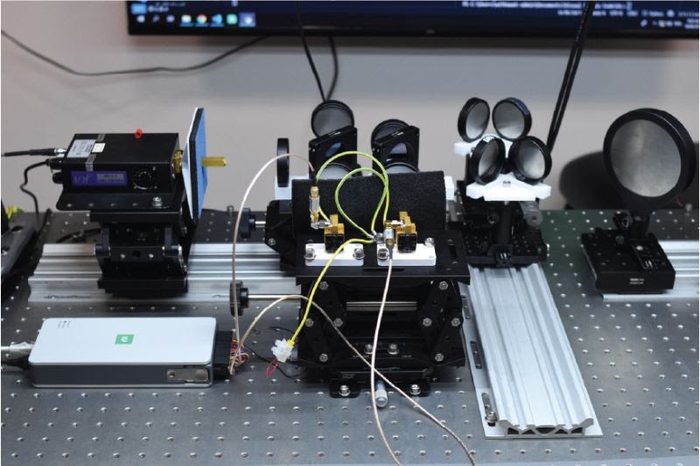
Quadrature homodyne detection
Our homodyne architectures provide robustness, high sensitivity, and rapid response. Quadrature homodyne detection is central to this approach, suppressing phase noise while recovering both amplitude and phase. This capability enables sensitive terahertz measurements ranging from microscale vibration to non-contact probing of active semiconductor devices.
Terahertz Applications
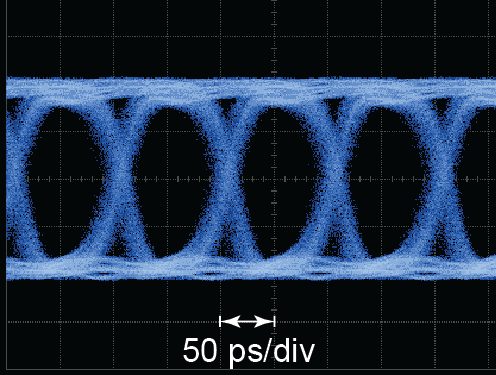
6G communications and beyond
Terahertz spectrum eases congestion at lower microwave and millimetre-wave bands, in theory supporting Tbit/s links over several kilometres. While line-of-sight constraints limit its use for mobile connectivity, terahertz is particularly promising for dense urban base stations, last-mile links, and data centres.
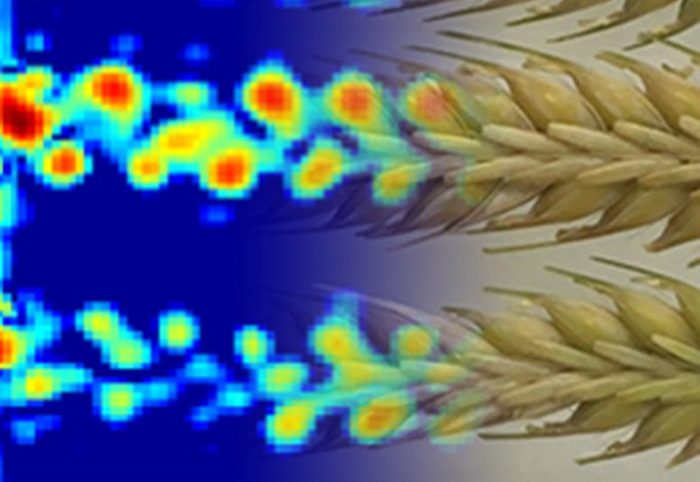
Non-destructive evaluation
Terahertz waves penetrate dry, non-metallic materials, such as plastics, paper, cloth, building materials, with millimetre spatial and depth resolution. We apply terahertz imaging techniques to quality control, security screening, gesture recognition, and medical diagnosis across agriculture, wine, healthcare, and defence.
Spectroscopy
The terahertz band hosts rotational, vibrational, lattice, and plasma resonances distinct to different materials. We combine spectroscopic techniques with precision metrology for high-fidelity material characterisation, sensing, and diagnostics.

Astronomy and atmospheric sensing
Water vapour, ozone, carbon monoxide, and complex organics show their strongest rotational transitions in the terahertz band, tracing chemical abundance, temperature, and dynamics in planetary atmospheres and star-forming regions alike. Progress depends on low-loss beam-control structures and high-responsivity detectors built for the terahertz regime.
Gallery of experiments
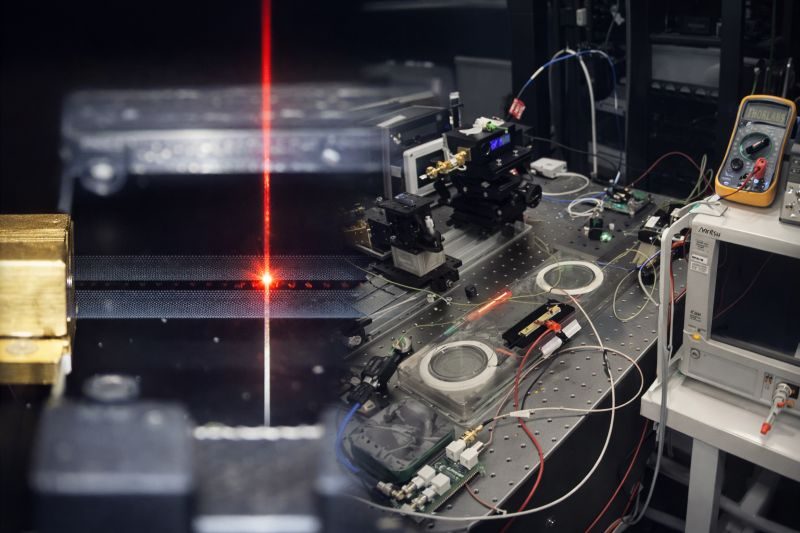
Optically controlled terahertz modulator
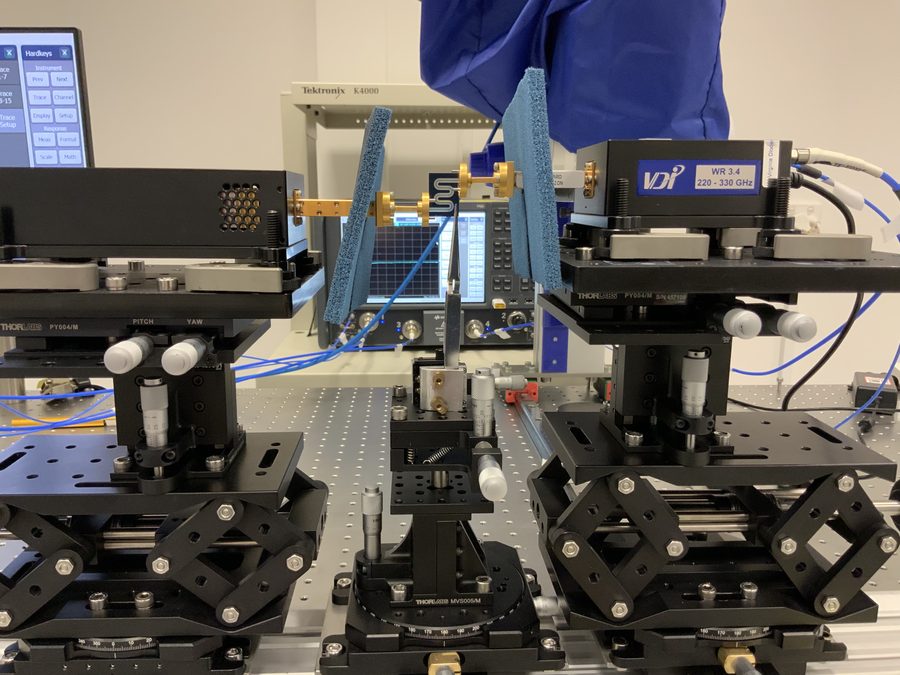
Transmission & reflection of integrated waveguide
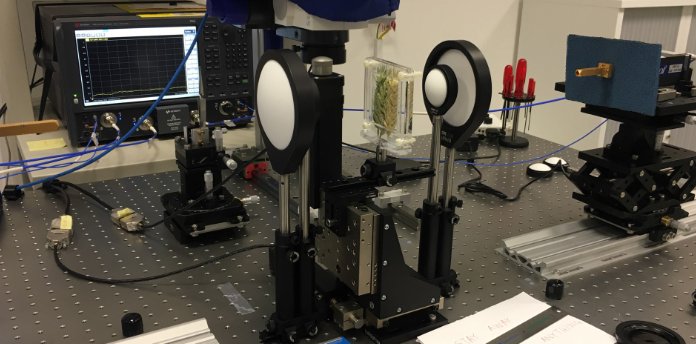
Raster-scan imaging of wheat
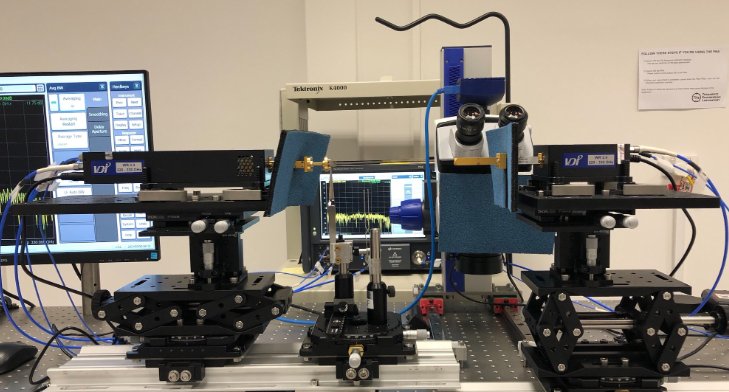
Radiation pattern and gain of antenna